The WW11: eye of the storm exhibit recently opened in NJCU's Letterman Gallery. The gallery focuses on the work of nine female artists whose work highlights the vital issues of climate change and ecosystem damage. The gallery is described as "Eye of the Storm is an urgent call for action to address the drastic changes in temperature, glacial melt, super storms, plastics pollution, and contaminated resources, from our local communities to as far away as the Arctic."
 |
| Yemaya by Sharon de La Cruz |
 |
| The Altar (Yemaya) by Sharon de La Cruz |
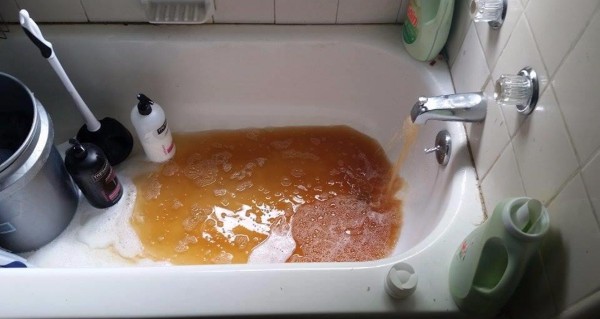 |
| Flint Water Crisis |
The first work I will be discussing is Sharon De La Cruz's Yemaya. The Yemaya piece focuses on the state of the ocean while also paying homage to Cruz's roots. Yemaya is the Yoruba goddess of the living ocean and considered the mother of all. Cruz, in my opinion, uses this as a way to connect both the idea of climate change and roots. She reimagines Yemaya as herself. She also depicts a traditional altar. When viewing this piece I think it touched on first the ecological preservation part of the piece, which we all know has become a major issue with the current presidential admin. believing that climate change is a Chinese science experiment(?). Also the topic of water, specifically clean water has been a huge discussion, globally, for about two years with towns like Flint who have not seen clean water in years, even prior to the national attention that it received, which sadly has dwindled and the people of towns like Flint have been denied access to clean water, indirectly and directly. Cruz's depiction of herself as Yemaya also brings me back to the artist, Hermonia Rosalez. Rosalez is a fellow Afro-Latina artist who uses her own identity to shape her work, replacing often whitewashed history with herself and other representations of colored women.
 |
| Harmonia Rosales Lioness |
 |
| Deborah Sperry, The Ark Project |
The next piece I will focus on is Deborah Sperry's The Ark Project. The project takes from the biblical story of Noah's Ark. The artists' website states that the project is a "social exploration developed with the idea that if everyone were to name one thing that was valuable; insert it in an Ark and save it from the worst effects of climate change." When viewing the project I thought about the current state of American politics, where people are using and in some sense have always used their power to rescue the bad guys. They get to escape from the harsh realities of issues that happen in Flint or the injustices of black and brown people in urban neighborhoods because they have built their own Ark. I also had more questions, some rhetorical in a way and others theoretical. In response to the piece, would it be easier to instead of packing everything into the "Ark" would it not be better and/or more beneficial to try to stop or reverse, if possible, the effects that have cause the climate change storm to begin with. But that question, in a way answers itself because the overall theme which chronicles sustainability and ecosystems. Of course relating to the current administration's views' on climate change and what it means for the health of ecosystems and such.
 |
| Tombola and Catacombs |
The next project is Tombola and Catacombs by Wendell Jeffrey explores the way harm to the environment destroys ecosystems and makes the organisms within these ecosystems develop abnormal behaviors. The project looks at the Emerald Ash Borer and the effect it has on trees. The sculpture, to me, shows the breaking down of the tree from the bark to the jewel color, which could represent the bug. As it turns out the bug is only invasive when not in its own habitat. The bug was bought over by way of shipping wood from Northeast Asia. However, the bug has now been highly destructive to ash trees in Europe and North America. U.S. government has been trying to put a cap on the destruction, by closely monitoring the bug, its habits, diversifying tree types, and more. The artist mentions that over 100 million ash trees have died in counting. He also suggest that by buying and burning local firewood we can keep the ash tree safe and help stop the spread of the bug where it is considered a dangerous species. I think that this project was super different and complex. It had several faces and the artist created a giant arch-type piece with several wall pieces that mapped the process of the ash borer. When looking at this project it reminds me of the injustices people face everyday. Whether it be being pushed out of neighborhoods through gentrification, pushed out their country by war, discrimination, and exile. Even though the life of humans and the life of bugs are much different, they are also the same. The environment shapes us and in turn we shape the environment, whether that be political, financial, social, etc. Quickly referring to the class reading, Nato Thompson on page 160 touches on pushing out, specifically gentrification. He states, "... they failed to recognize an equally pervasive war at home that many artists and activists were diligently focusing on. A war over housing. A war over borders. A war over space."
 |
| Tombola and Catacombs |
Taking a look at the exhibits and reading Nato Thompson's Seeing Power, I see the the parallels between his words and real life. For instance on page 52, Thompson states, "The task of socially engaged artists is the deployment of cultural forms and the production of political change." When thinking about the pieces shown above and even Joyce Yu-Jean Lee's exhibit, we see that culture and politics and art all go hand in hand. For example in Yemaya we see the artist representing herself and culture but also speaking on environmental politics.
Work(s) Referenced:
http://www.nationalbaptist.com/departments/disaster-management/flint-water-crisis-2016.html
http://www.thaliatook.com/AMGG/yemaya.php
https://www.harmoniarosales.com/collections
http://www.emeraldashborer.info

No comments:
Post a Comment